Rehana Ferdouse
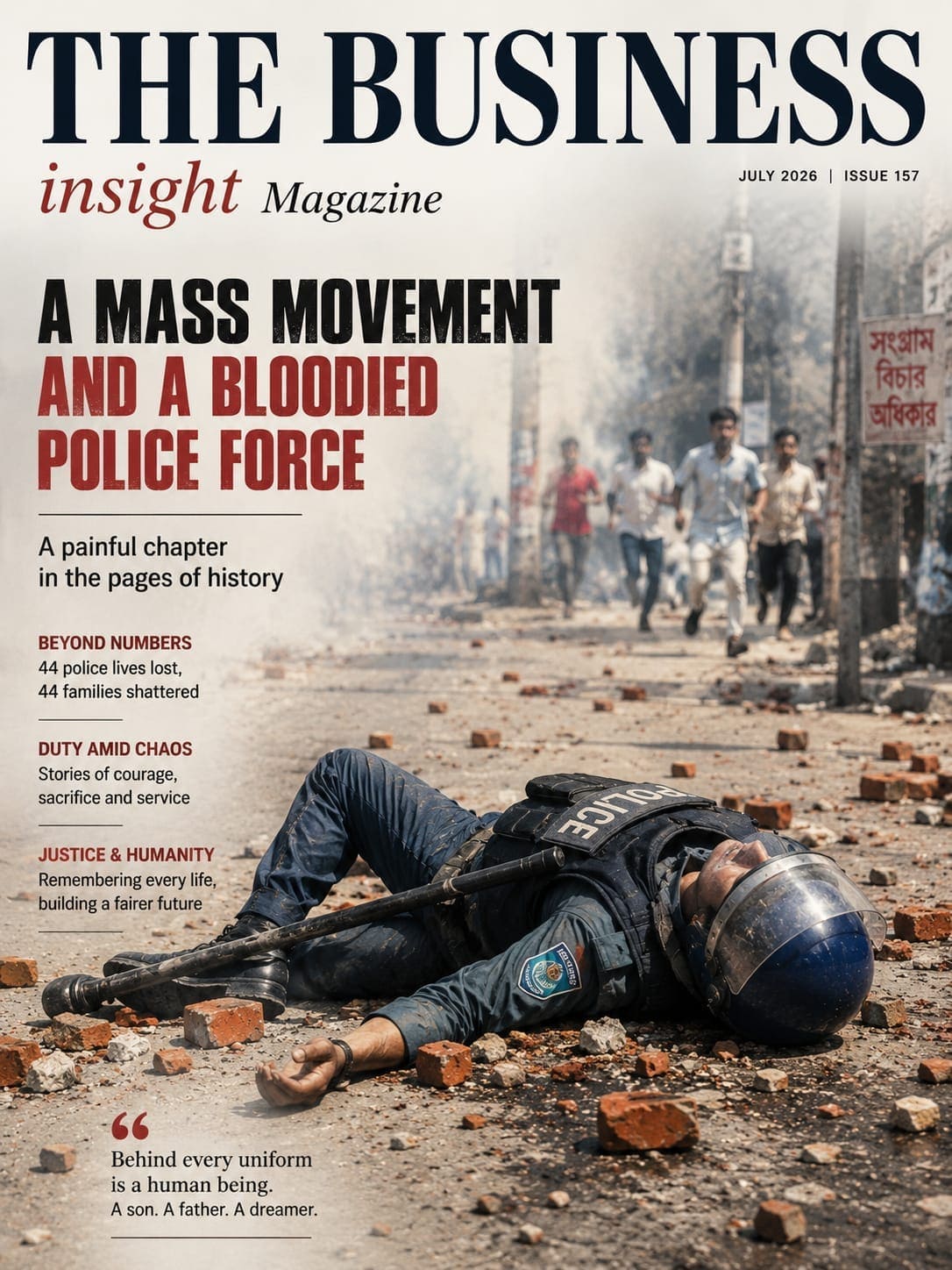
A Painful Chapter in the Pages of History Any mass movement becomes an important chapter in the history of a nation. However, the history of such movements is not defined only by political transformation; the human cost and suffering associated with them deserve equal attention. During the violent events of July–August 2024, along with many civilians, members of the Bangladesh Police also lost their lives while carrying out their professional duties.

According to information published by the Bangladesh Police Headquarters, 44 police members were killed during the July–August 2024 incidents. The published list includes their names, ranks, workplaces, dates of death, and locations of the incidents. These figures are not merely statistics; behind every number lies a family, an unfinished dream, and a personal story of immense grief. Therefore, this issue deserves to be viewed not only as an administrative record but also from a humanitarian perspective. The identities, workplaces, and details of the deceased police members have now become part of official records. This article aims to present a fact-based discussion on the human aspects of those police members who lost their lives while performing their duties, their sacrifices, and the role of law enforcement agencies in maintaining public order and security. When history is written, major events, political decisions, and changes in power often become the central focus of discussion. However, another important dimension of history is the remembrance of those who lost their lives while performing their responsibilities—their families, their sacrifices, and their untold stories. Every human life carries value. Showing respect and compassion toward those who lose their lives while fulfilling their duties is a reflection of a civilized society. At the same time, the United Nations human rights report on the events highlighted the importance of investigating allegations of violence, loss of life, and human rights violations during the unrest. Such reports provide an important reminder for the future—that objective assessment of crises, the pursuit of truth, and the protection of human dignity are fundamental responsibilities of any democratic society. The Bangladesh Police Headquarters has published detailed information regarding the police members who lost their lives during the July 2024 movement, including their names, ranks, dates of death, units where they were serving, and the locations of the incidents. Among the 44 deceased police members, there were 3 Police Inspectors, 11 Sub-Inspectors (SIs), 7 Assistant Sub-Inspectors (ASIs), 1 Town Sub-Inspector (TSI), 1 Naik, and 21 Police Constables. The three deceased Police Inspectors were Md. Abdur Razzaque, Rashedul Islam, and Md. Masud Parvez Bhuiyan. The 11 deceased Sub-Inspectors were Sujan Chandra Dey, Khagendra Chandra Sarker, Rezaul Karim, Md. Mamunur Rashid Sarker, Bashir Uddin, Rais Uddin Khan, Tahchenuzzaman, Pranabesh Kumar Biswas, Md. Nazmul Hossain, Anisur Rahman Molla, and Santosh Chowdhury. The seven deceased Assistant Sub-Inspectors were Sanjay Kumar Das, Firoz Hossain, Sohel Rana, Raju Ahmed, Obaidur Rahman, Rafiqul Islam, and Md. Moktadir. Among the deceased members, one Town Sub-Inspector (TSI), Ali Hossain Chowdhury, and one Naik, Md. Gias Uddin, were also included. The 21 deceased Police Constables were Md. Abdul Majid, Rezaul Karim, Mahfuzur Rahman, Shahidul Alam, Md. Abu Hasnat Rony, Mir Montaz Ali, Sumon Kumar Gharami, Mohammad Abdul Malek, Mohammad Ibrahim, Md. Abdus Salam, Md. Hafizul Islam, Md. Robiul Alim Shah, Md. Humayun Kabir, Md. Ariful Azam, Md. Riajul Islam, Md. Shahin Uddin, Md. Ershad Ali, Mainuddin Liton, Md. Sujon Mia, Md. Khalilur Rahman, and Md. Hanif Ali. An analysis of the published list shows that the deceased police members were serving in different units across the country. Among them, 14 were members of the Dhaka Metropolitan Police (DMP), 15 were from Enayetpur Police Station in Sirajganj, and others were serving in different police units and districts, including Noakhali, Cumilla, Chandpur, Habiganj, Dhaka Special Branch (SB), Narayanganj PBI, Tourist Police Headquarters, Highway Police, Khulna Metropolitan Police, Gazipur Metropolitan Police, and Dhaka District Police. The information also indicates that 25 police members lost their lives while they were inside or near police stations, performing their responsibilities during a highly challenging period. The loss of these police members represents not only the death of government employees but also the loss of individuals who were members of families, communities, and society. Behind every uniform was a human being—with personal dreams, loved ones, and responsibilities. Their deaths remind us that those who serve in law enforcement are also citizens of the country. They are someone’s children, siblings, spouses, or parents. Their lives and sacrifices deserve to be remembered with humanity and respect. In any country, the loss of law enforcement personnel while carrying out their duties is a deeply tragic and concerning matter. At the same time, the loss of innocent civilian lives is equally painful. In a civilized society, every human life carries equal dignity, and therefore every loss of life should be assessed with compassion, fairness, and respect for the rule of law. Behind every uniform is a human being. They are someone’s child, sibling, spouse, or parent. Beyond their professional identity, police members are also ordinary citizens with families, dreams, and personal responsibilities. When they step forward to perform their duties, they often do so while carrying the expectations and concerns of those who depend on them. The police are a disciplined organization where responsibilities are carried out according to established policies, institutional instructions, professional training, and the principle of the chain of command. Members working at the field level perform their duties within the framework of assigned responsibilities and professional obligations. Therefore, when evaluating any crisis situation, it is important to consider both individual actions and institutional responsibilities through a fair and balanced perspective. The police members who lost their lives during the July 2024 incidents were performing duties under extremely difficult circumstances. Their deaths left behind grieving families and communities who continue to carry the pain of their loss. However, it is also important to recognize that no profession consists entirely of individuals who are the same. As in every section of society, there can be differences in the actions and conduct of individuals within any institution. The actions of a few should not automatically define an entire organization. At the same time, maintaining professionalism, accountability, and public trust remains essential for every institution. The role of the police in maintaining law and order and ensuring public safety is significant. A stable society requires cooperation between citizens and law enforcement agencies. Public confidence, professional integrity, and respect for human rights are not contradictory values; rather, they are the foundations of an effective and fair system. A society that remembers those who lost their lives while serving their duties, while also upholding justice, accountability, and human dignity, becomes stronger and more compassionate over time. History is not only a record of political changes or major events; it is also a reflection of the lives lost, the families affected, and the human stories behind those events. Remembering every life lost with dignity and humanity is a responsibility that belongs to all of us.
Source: Bangladesh Police Headquarters (Published list of deceased police members, 18 August 2024)

Author Biography:
Rehana Ferdouse is a columnist, analytical writer, and voice artist from Bangladesh. She regularly contributes to leading national newspapers and periodicals, writing on society, culture, economics, public life, and contemporary social issues. She earned both her Bachelor’s and Master’s degrees in Economics with First Class distinction from Eden Mohila College. Her work is characterized by evidence-based analysis, critical thinking, and a balanced approach to issues of public interest. In addition to her writing, she is recognized for her contributions as a voice artist in recitation and documentary narration. She currently serves as the Vice Chairperson of the Social Welfare Department of the Executive Committee of the Central Police Women’s Welfare Association (PUNAK), where she actively supports initiatives related to women’s empowerment, social welfare, and community development.

- Md. Saiful Islam Journalisthttps://thebusinessin.com/author/saifuljournalist/

- Md. Saiful Islam Journalisthttps://thebusinessin.com/author/saifuljournalist/

- Md. Saiful Islam Journalisthttps://thebusinessin.com/author/saifuljournalist/

- Md. Saiful Islam Journalisthttps://thebusinessin.com/author/saifuljournalist/