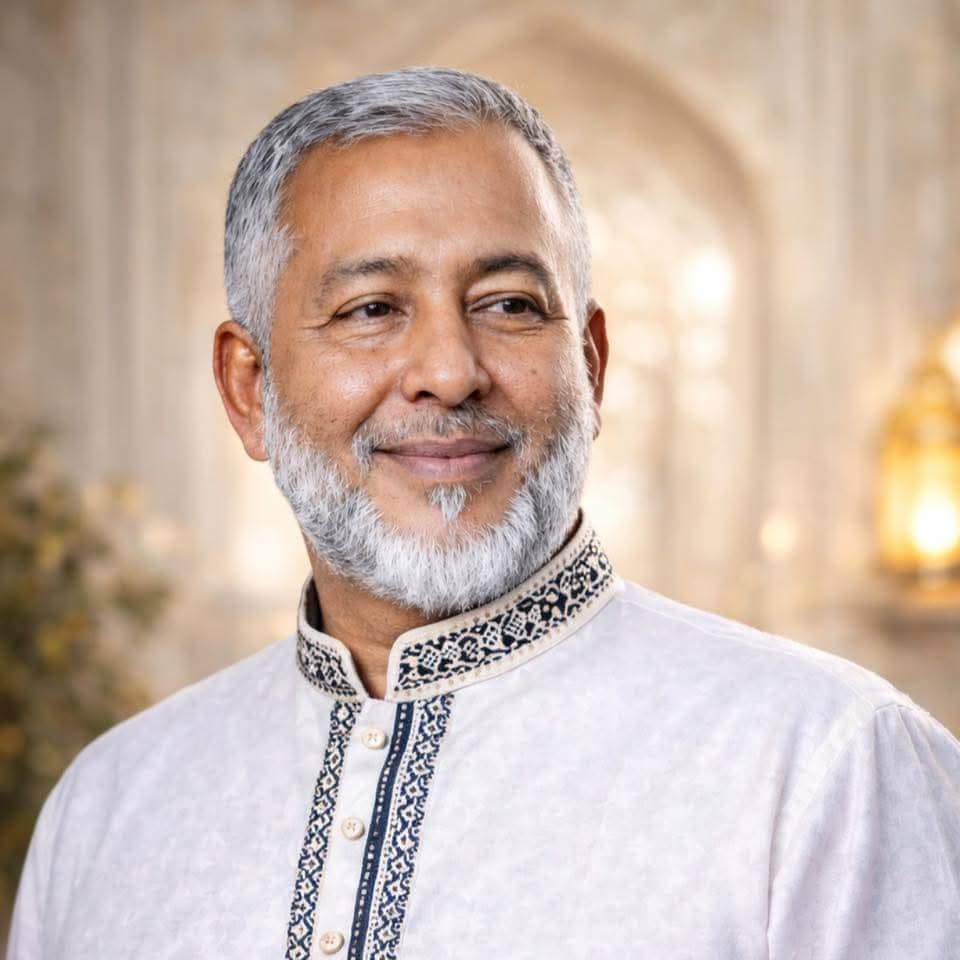
From entrepreneurship and newspaper publishing to philanthropy and grassroots community service, the Sirajganj businessman is seeking to build a legacy of compassion, public trust and social responsibility.
By Hanif Talukder
A person’s true worth is not measured merely by wealth, professional titles or social standing. It is reflected in character, actions and the willingness to stand beside others during difficult times. Many people achieve financial success, and others rise to positions of influence. Yet relatively few manage to earn a lasting place in people’s hearts.
Money can create influence, but genuine affection and trust require compassion, empathy and a sustained commitment to human welfare.
In Sirajganj, Haji Md. Abdus Sattar has become known for combining business leadership with community service. As an entrepreneur, newspaper publisher and philanthropist, he has sought to extend his influence beyond commercial activities and into the everyday lives of ordinary people.
His involvement in environmental cleanliness, assistance to disadvantaged families, access to safe drinking water, healthcare support and educational and religious institutions reflects an approach to social responsibility rooted in personal engagement.
For many people who approach him seeking assistance, he represents more than a successful businessman. He is someone willing to listen.
A Personal Connection Beyond Professional Life
Until about a year ago, I did not know Haji Md. Abdus Sattar personally.
Although I was born in Sirajganj, much of my adolescence and adult life was spent in Jashore and Dhaka. Consequently, despite my emotional attachment to my birthplace, my personal connections within the city remained limited.
After returning to live in Sirajganj a little over a year ago, I gradually began reconnecting with its people and institutions.
My first meeting with Sattar took place approximately seven or eight months ago.
He was extremely busy that day. Numerous visitors had gathered to meet him, many seeking assistance or hoping to discuss personal difficulties.
Despite the demands on his time, he met me and we spoke. That initial conversation gradually developed into a relationship of mutual affection and respect.
For approximately six months, I have also been associated with the daily Jamunar Katha, which he edits and publishes. This professional relationship has given me opportunities to observe his activities and interactions with people more closely.
Our relationship also developed an unusual emotional dimension.
At our first meeting, I was struck by his resemblance to my late maternal uncle, Md. Abdus Sattar Talukder.
My uncle, who passed away many years ago, was particular about his appearance. He preferred white shirts, trousers and shoes, and maintained a distinctive sense of personal style.
Something about Sattar’s appearance and personality reminded me of him.
Eventually, I began affectionately addressing him as Mama, the Bengali term for maternal uncle.
Interestingly, Sattar is eight years younger than I am. Yet the affectionate relationship that developed between us has never been constrained by age.
Some relationships are formed through family ties. Others emerge through an invisible connection of memory, affection and shared human experience.
Ours belongs to the latter category.
From Sirajganj Roots to Business and Community Leadership
Haji Md. Abdus Sattar was born on August 27, 1972, in the Dhanbandhi area of Sirajganj town.
His father was Md. Jinnat Ali Sheikh, and his mother was Mosammat Kamala Begum. Both have passed away.
The values and principles inherited from parents often shape an individual’s understanding of responsibility, compassion and personal conduct throughout life.
Today, Sattar holds several professional and institutional responsibilities.
He is the Editor and Publisher of the daily Jamunar Katha, a businessman and a Director of the Sirajganj Chamber of Commerce and Industry.
He also serves as Chairman of the Abdus Sattar Foundation, through which various charitable and community welfare activities are organised.
These responsibilities place him at the intersection of business, journalism and social development.
However, his public identity is not confined to institutional positions.
His philanthropic activities have brought him into contact with people from different social and economic backgrounds, particularly those facing financial hardship.
For Sattar, the relationship between business success and social responsibility appears to be an important part of his working philosophy.
A Cleaner Sirajganj Through Community Participation
The character of a city is not defined solely by its buildings, roads or commercial establishments.
Its true quality is reflected in public cleanliness, civic awareness and the everyday living conditions of its residents.

Recognising the importance of a cleaner urban environment, Sattar has taken an initiative to support cleanliness activities across Sirajganj Municipality.
According to information associated with the programme, approximately 200 male and female volunteers participate in cleaning operations on a rotational basis.
Their activities generally take place between 6 am and 9 am, covering different municipal wards.
Volunteers clean roads, drains and surrounding public areas in an effort to improve environmental conditions.
The significance of this programme extends beyond waste removal.
Community participation in cleanliness activities can strengthen civic responsibility and encourage residents to regard public spaces as a shared responsibility.
It also helps promote respect for the work involved in maintaining a clean city.
An urban environment becomes genuinely sustainable when its residents develop a sense of ownership and responsibility toward their surroundings.
For Sirajganj, such grassroots participation offers a practical example of how local initiatives can complement municipal services.
### Supporting Small Traders and Families in Need
Poverty affects more than household income.
It can weaken confidence, restrict opportunities and place enormous pressure on families struggling to meet basic needs.
Small traders and low-income households are particularly vulnerable to rising food prices and other living expenses.
During Ramadan, the Abdus Sattar Foundation organised a rice distribution programme for several hundred disadvantaged small shopkeepers and other people in need near Sirajganj Municipal Park.
Many of the beneficiaries depend on modest amounts of capital and daily earnings to support their families.
Assistance of this kind can provide temporary relief during periods of financial pressure.
However, the importance of such programmes is not limited to the distribution of essential goods.
They also acknowledge the struggles of people who work hard to sustain their livelihoods despite limited resources.
Humanitarian assistance becomes more meaningful when beneficiaries are treated with dignity rather than pity.
The underlying principle is straightforward: people experiencing hardship deserve both practical support and respect.
Providing Safe Drinking Water to the Public
Access to safe drinking water is one of the most basic requirements of a healthy community.
Yet for pedestrians, transport workers, street vendors and other people spending long hours outdoors, clean drinking water may not always be readily available.
Sattar has supported the installation of a 1,000-litre water tank and drinking water taps at the Post Office intersection in Diardhangara, Sirajganj.

The facility is intended to provide drinking water to members of the public.
Although relatively modest in scale, the initiative addresses a practical everyday need.
For a labourer working in the heat or a pedestrian travelling through the town, access to drinking water can offer immediate comfort.
Community service does not always require large infrastructure projects or substantial financial expenditure.
Sometimes a simple facility, thoughtfully placed and properly maintained, can make a meaningful difference in people’s lives.
An Open Door for the Disadvantaged
Every Friday morning, beginning around 9 am, large numbers of disadvantaged people reportedly gather at Sattar’s business office.
They come with different concerns, including financial hardship, family difficulties and requests for assistance.
Sattar meets visitors, exchanges greetings, listens to their problems and provides financial help according to his capacity.
The practice has become a distinctive aspect of his engagement with the local community.
Listening to people facing difficulties is itself an important expression of social responsibility.
Financial hardship is often accompanied by uncertainty and emotional distress. People seeking assistance may need not only material support but also reassurance and understanding.
Sattar’s willingness to maintain direct contact with visitors reflects an approach to philanthropy that places personal interaction alongside financial contributions.
His community involvement also extends to moments of grief.
When someone dies in Sirajganj or surrounding areas, he makes an effort to attend the funeral prayers.
He is also known for sitting and eating with people from modest economic backgrounds, including spending time with them in informal settings.
Such interactions can help reduce the social distance that often separates successful businesspeople from ordinary citizens.
True leadership is not necessarily demonstrated by the height of one’s position, but by the ability to remain accessible to people from all walks of life.
Compassion in Healthcare and Blood Donation
Serious illness can create profound uncertainty for families, particularly when treatment costs exceed their financial capacity.
For disadvantaged households, medical expenses can threaten savings, income and long-term financial stability.
Sattar has visited patients undergoing treatment at Sirajganj Sadar Hospital, enquired about their condition and offered assistance where possible.
Such visits can provide emotional reassurance alongside practical support.
His involvement in health-related initiatives also includes encouraging voluntary blood donation.
On the occasion of World Blood Donor Day, he attended the inaugural programme of Hridoye Rokto, a voluntary blood donation organisation, at Islamia Government College in Sirajganj as chief guest.
Blood donation is an essential part of emergency healthcare.
A timely donation can help save a life and provide hope to families facing medical emergencies.
Community leaders can contribute to public health by encouraging younger generations to participate in voluntary blood donation and other humanitarian activities.
Sattar’s participation in such programmes reflects his interest in promoting social awareness alongside direct assistance.
Tk 10 Lakh Contribution to the Government Zakat Fund
Zakat is one of the fundamental obligations of Islam, with an important social purpose: supporting disadvantaged people and promoting a more equitable distribution of wealth.
Its broader significance extends to social welfare, economic justice and community solidarity.
Sattar has contributed Tk 10 lakh, equivalent to Tk 1 million, to the government Zakat Fund through a cheque donation.
The contribution reflects his participation in an institutional mechanism intended to support people in need.
Beyond this donation, he has provided financial assistance to schools, colleges, mosques, madrasas, orphanages and graveyards.
His contributions have also included support for infrastructure improvements and land filling at community institutions.
These activities illustrate the range of social and religious development initiatives with which he has been associated.
For entrepreneurs, supporting such institutions can be an important means of contributing to the long-term development of their communities.
Business Success and Social Responsibility
A successful entrepreneur’s contribution to society is not limited to the financial performance of a business.
Businesses generate employment, support local suppliers, stimulate economic activity and create opportunities for families.
When commercial success is accompanied by social responsibility, its benefits can extend further into the community.
As a Director of the Sirajganj Chamber of Commerce and Industry, Sattar is connected with the district’s business community.
Through the Abdus Sattar Foundation, he has also sought to address social needs outside his commercial responsibilities.
This combination of entrepreneurship and philanthropy is a significant feature of his public life.
However, the lasting value of charitable initiatives should be assessed through their consistency, transparency and measurable contribution to public welfare.
The popularity of an initiative is less important than its ability to produce meaningful and sustainable improvements.
For charitable activities to have lasting impact, they require organised management, financial accountability and participation from the communities they serve.
As the foundation’s activities develop, stronger institutional systems could help ensure that assistance reaches beneficiaries effectively and continues over time.
The challenge for any philanthropic organisation is to transform personal generosity into a sustainable structure of community support.
The Value of Staying Close to Ordinary People
One of the most striking aspects of Sattar’s community engagement is the importance he appears to place on remaining accessible.
Despite his business commitments and institutional responsibilities, he continues to maintain contact with people seeking assistance.
This accessibility has personal significance for me.
During my relatively short acquaintance with him, I have observed the attention he gives to visitors and the relationships he maintains with people from different backgrounds.
I do not claim to know every aspect of his life or professional activities.
Nevertheless, the experiences I have gained through our personal relationship and my association with Jamunar Katha have helped me understand the importance he attaches to community involvement.
A person’s character is not always revealed through grand achievements.
Sometimes it becomes visible in ordinary moments: listening patiently, sharing a meal, visiting a sick person or attending a funeral.
Such gestures may appear small, but they can carry considerable emotional meaning.
Building a Legacy Beyond Wealth
Personal wealth, professional success and institutional positions are often temporary measures of achievement.
Over time, titles change, businesses evolve and public recognition may fade.
What can endure is the positive difference a person makes in the lives of others.
For Sattar, the initiatives associated with his public life cover a wide range of community needs.
They include cleanliness programmes, food assistance, access to safe drinking water, support for hospital patients, encouragement of voluntary blood donation and contributions to educational and religious institutions.
Each addresses a different aspect of social welfare.
Taken together, they reflect an effort to remain engaged with the everyday challenges facing people in Sirajganj.
As someone born in this town, I feel a deep emotional connection to its people, history and development.
When individuals contribute to the welfare of my birthplace, I naturally feel a sense of appreciation and hope.
Yet appreciation should always be accompanied by a commitment to objectivity.
The true measure of social service lies in its practical results, the dignity of those receiving assistance and the sustainability of the programmes undertaken.
A philanthropic legacy becomes stronger when compassion is supported by accountability and lasting institutions.
Winning Hearts Through Humanity
My relationship with Haji Md. Abdus Sattar began only a few months ago.
It developed through professional contact, personal affection and an unexpected resemblance to someone I had loved and lost.
That personal connection has given me a special perspective on his character.
But the wider significance of his activities lies beyond my individual experience.
It lies in the families receiving assistance, the people gaining access to drinking water, the volunteers participating in cleanliness programmes and the patients who find someone willing to listen.
If a struggling household receives relief, if a neighbourhood becomes cleaner, if a patient gains encouragement or if a young person is inspired to donate blood, the benefits extend beyond any single individual.
These are the everyday contributions through which stronger communities are built.
For Sattar, the opportunity ahead is to expand these activities, strengthen their institutional foundations and ensure that they continue to serve people effectively.
His business accomplishments and professional positions form one part of his public identity.
His engagement with disadvantaged people and community welfare represents another.
Ultimately, a person’s most enduring achievement may not be the wealth accumulated or the buildings constructed, but the trust, comfort and hope brought into the lives of others.
In Sirajganj, Haji Md. Abdus Sattar is seeking to build such a legacy.
And for those who know him personally, including someone who affectionately calls him Mama, the hope is that his commitment to humanity will continue to grow, reaching more people and creating a lasting contribution to the community he calls home.

About the Author
Hanif Talukder is a Bangladeshi journalist and columnist associated with the daily Jamunar Katha in Sirajganj. Born in Sirajganj, he spent much of his adolescence and adult life in Jashore and Dhaka before returning to his hometown. His writing explores people, community life, humanitarian values and social responsibility. This feature draws on his personal observations and acquaintance with Haji Md. Abdus Sattar.

- Md. Saiful Islam Journalisthttps://thebusinessin.com/author/saifuljournalist/

- Md. Saiful Islam Journalisthttps://thebusinessin.com/author/saifuljournalist/

- Md. Saiful Islam Journalisthttps://thebusinessin.com/author/saifuljournalist/

- Md. Saiful Islam Journalisthttps://thebusinessin.com/author/saifuljournalist/