Special Correspondent
Fri Oct 3, 2025
Bangladesh has attracted just $1.8 billion in greenfield foreign direct investment (FDI) in logistics between 2019 and 2024—a modest 4.9 percent share of South Asia’s total inflows, according to a recent study by GlobalData and the International Finance Corporation (IFC).
The report, published on the Bangladesh Investment Development Authority (BIDA) website in June, highlights that the country managed to secure only 10 logistics and warehousing projects during the period. Additionally, around $185.6 million flowed into sales and administrative functions within the sector.
Major Announcements, Limited Share
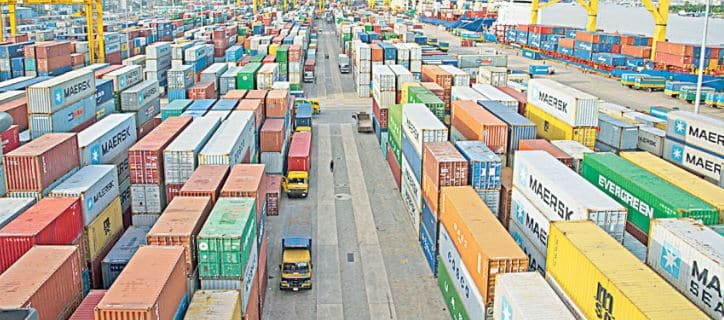
Notable commitments include UAE-based Abu Dhabi Ports’ $1 billion investment in a multipurpose terminal under Chattogram’s Bay Terminal project and Denmark’s AP Moller-Maersk’s $400 million plan for a new container terminal at Laldia, Chattogram.
Yet, despite these headline projects, Bangladesh’s overall share lags far behind India, which accounted for a staggering 85 percent of South Asia’s 258 logistics FDI projects.
Missed Chances, New Opportunities
The report points out that global investment decisions are being shaped by geopolitics, policy shifts, and technological change, urging Bangladesh to act strategically.
Key recommendations include:
Developing dual-use logistics infrastructure serving both international trade and domestic demand.
Promoting green logistics solutions to align with sustainable investment trends.
Leveraging smart technologies to cut inefficiencies, streamline documentation, and improve supply chain management.
Offering targeted incentives to attract core logistics, e-commerce, food, and textile players.
The Strategic Imperative
Commenting on the findings, M Masrur Reaz, chairman and CEO of the Policy Exchange of Bangladesh, underscored logistics as “absolutely critical” to the country’s export-led growth strategy.
> “Our competitiveness hinges on faster delivery to global markets and lower freight costs, both of which depend on efficient logistics,” he said.
Reaz noted that Bangladesh remains well behind regional peers such as Vietnam, Thailand, and India in infrastructure, ports, storage, and transport services—factors that restrict competitiveness and discourage global players.
But the window is still open. “A billion-dollar opportunity exists to attract international operators across ports, river terminals, multimodal transport, and inland container services,” he said. “Strategic investment can not only boost exports but also bring world-class operators, enhancing Bangladesh’s credibility as an investment destination.”

- admin1@gmail.comhttps://thebusinessin.com/author/admin1gmail-com/

- admin1@gmail.comhttps://thebusinessin.com/author/admin1gmail-com/

- admin1@gmail.comhttps://thebusinessin.com/author/admin1gmail-com/

- admin1@gmail.comhttps://thebusinessin.com/author/admin1gmail-com/