From a Garment Boardroom to the Central Bank: Bangladesh Bank Opens a New Chapter
Ali Kodar Polash
DHAKA, Wednesday 25 February
Bangladesh Bank entered a new and unusual phase on Wednesday after a day of protests inside its headquarters, a dramatic exit for the sitting governor, and renewed debate over loan rescheduling policies.
 The day began with simmering tension at the central bank’s Motijheel office. A transfer order issued a day earlier for three officials triggered internal anger that quickly escalated into a protest. Officials hung banners, demanded the transfer be withdrawn, and some also raised calls for the governor’s resignation.
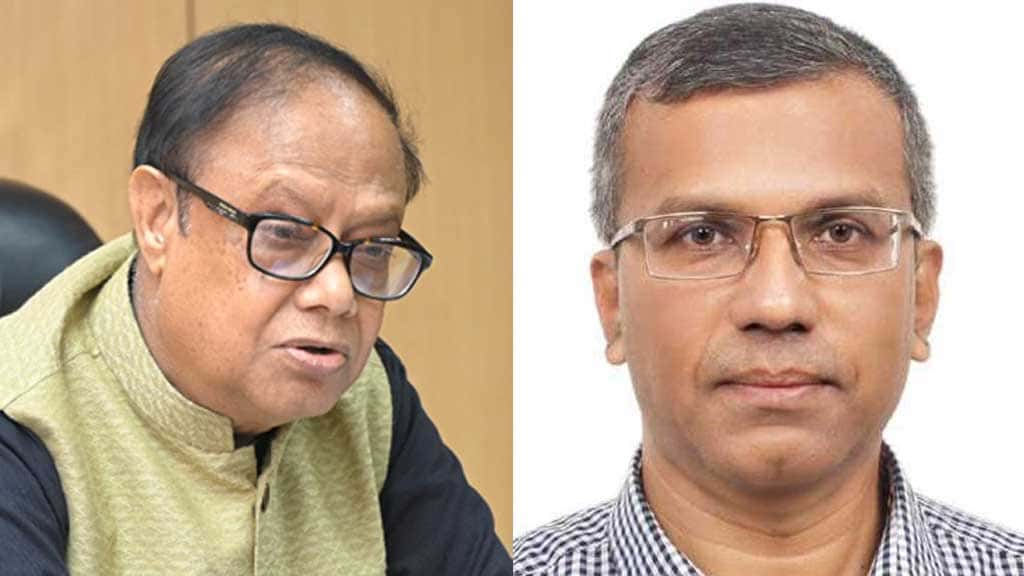
Amid the unrest, then-governor Ahsan H. Mansur appeared at a midday news conference, saying the central bank’s bank-merger and weak-bank recovery efforts were facing “propaganda.” He also used the word “conspiracy,” according to accounts of the briefing. By then, however, the situation was already shifting. The process to appoint a new governor was underway at the Secretariat.
By late afternoon, the government issued a gazette notification canceling Mansur’s remaining tenure and appointing businessman Md. Mostakur Rahman as the new governor.
The decision is being described as unprecedented in Bangladesh Bank’s history, as it marks the first time the central bank will be led by a businessman rather than a career banker, economist, or senior civil servant.
Tensions inside the bank also appeared to intensify as the day unfolded. Reports said staff forced one of the governor’s advisers to leave the office amid the internal pushback, reflecting the depth of the rift within the institution.
Mansur’s tenure had been closely associated with a major reform drive in the banking sector. News reports during his term also highlighted that foreign exchange reserves, measured under the BPM6 framework, rose above $30 billion. His removal is therefore being viewed by some as a clash over policy direction, while others see it as a shift in political priorities.
Rahman, the new governor, comes from Bangladesh’s garment industry. He is the managing director and CEO of Hera Sweaters Garments, holds undergraduate and postgraduate degrees in accounting from the University of Dhaka, and is an FCMA from ICMAB. He has also served as chairman of BGMEA’s standing committee on Bangladesh Bank affairs, a role that placed him near key policy discussions in recent years.
Soon after his appointment, attention turned to a separate controversy. Questions surfaced about a loan linked to his business, with reports claiming a large borrowing from Mutual Trust Bank had turned non-performing after payments were not made on time. The loan was later rescheduled after a one-time payment of a specified portion, according to the same reports.
That rescheduling has drawn scrutiny because it coincided with a broader easing trend in Bangladesh Bank’s rescheduling policies—an issue that has been debated by analysts who warn such relaxations can weaken loan recovery and increase risks for the banking system. International ratings monitoring has also flagged concerns in the past about policy measures that may undermine discipline in credit repayment.
The challenges for the new governor are already clear: restoring confidence in the banking sector while ensuring that policy decisions are insulated from any perception of conflict of interest.
In his first public reaction, Rahman said “trust building” in the banking sector would be his main priority. He also signaled an emphasis on efforts to bring down interest rates.
With internal discontent, external skepticism, policy uncertainty, and questions about the new governor’s corporate past, Bangladesh Bank now stands at a crossroads. Rahman’s first set of decisions is expected to determine whether a “businessman governor” becomes merely a historic exception—or the start of a lasting shift in direction.

- admin1@gmail.comhttps://thebusinessin.com/author/admin1gmail-com/

- admin1@gmail.comhttps://thebusinessin.com/author/admin1gmail-com/

- admin1@gmail.comhttps://thebusinessin.com/author/admin1gmail-com/

- admin1@gmail.comhttps://thebusinessin.com/author/admin1gmail-com/