Nurunnabi Sohel
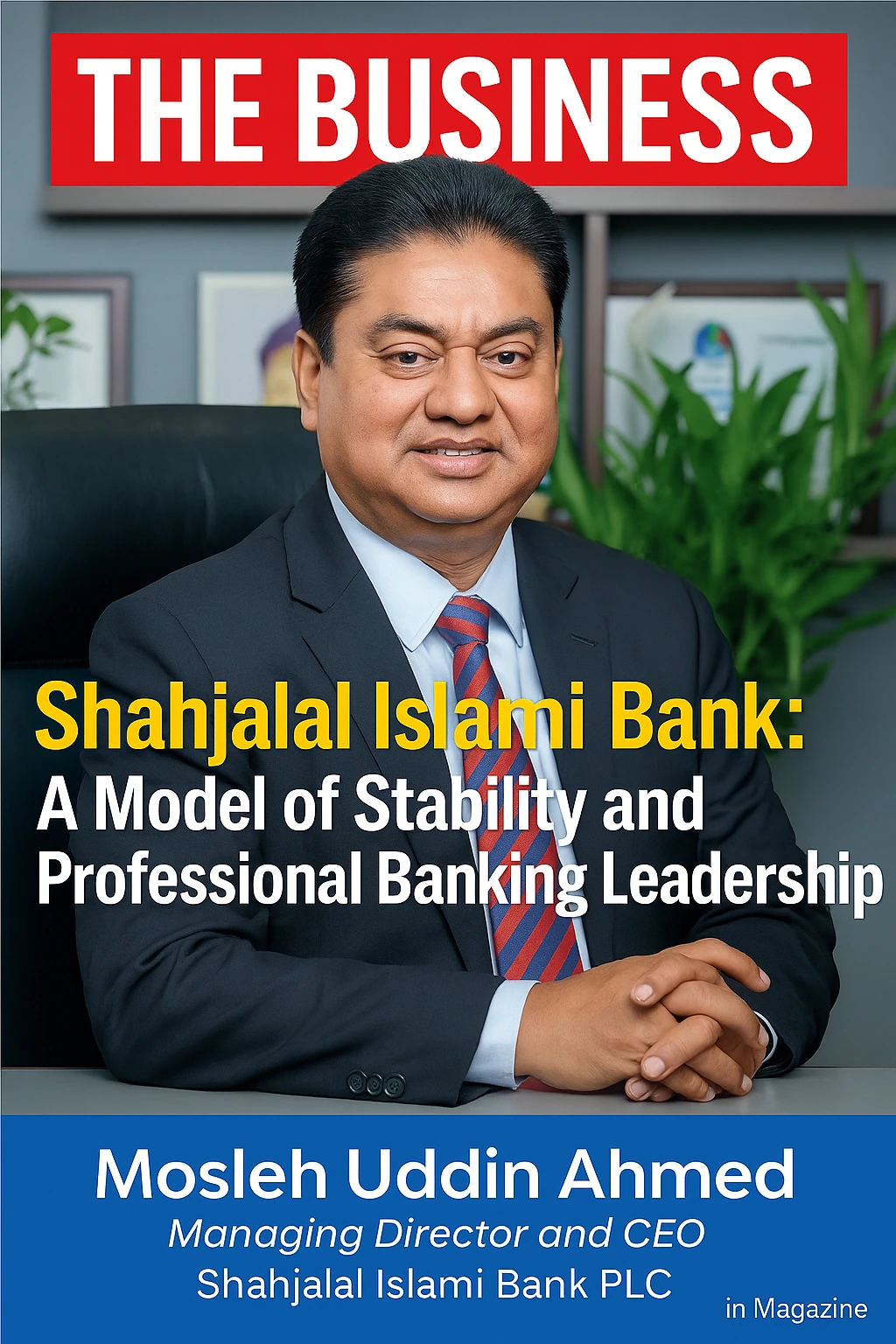
In Bangladesh’s banking sector, where non-performing loans (NPLs) often dominate headlines and trigger concerns, Shahjalal Islami Bank has quietly emerged as a model of professional management and stability. Over the course of 22 years, this Shariah-based private commercial bank has maintained its credibility, keeping default loans well below the international threshold while strengthening customer trust and achieving steady growth.
Strong Position in the Industry
With 140 branches, 3 sub-branches, 119 ATMs, 112 agent banking outlets, an offshore banking unit, and two priority centers, Shahjalal Islami Bank has steadily expanded its reach across the country. The bank holds deposits worth Tk 24,400 crore, while investments stand at Tk 23,500 crore. Its export financing portfolio has crossed Tk 30,000 crore, highlighting its active role in supporting Bangladesh’s trade and commerce.
In terms of credit rating, the bank currently enjoys a ‘AA+’ status, ranking alongside some of the country’s leading financial institutions. Such recognition underlines its financial discipline and strong asset quality.
Continuous Profit Growth
Despite sector-wide challenges, Shahjalal Islami Bank has posted consistent growth in net profit for four consecutive years, with a remarkable 37% increase in the latest fiscal year. The driving force behind this performance has been the bank’s ability to manage costs efficiently.
The cost of funds, for instance, remains at just 3.2%—second only to Dutch-Bangla Bank—while operating expenses are kept as low as 1.67%, compared to the industry average of 3–4%. Such financial prudence has allowed the bank to attract depositors, even when offering comparatively lower returns, as customers remain confident about the bank’s safety and stability.
Keeping Defaults in Check
One of the most striking achievements of Shahjalal Islami Bank has been its ability to maintain non-performing loans at just 3.86%, close to the international benchmark of 5%. This has been possible due to the bank’s rigorous loan assessment process, which involves multiple layers of evaluation before any investment is approved.
By carefully analyzing the future business prospects of borrowers, the bank has avoided risky exposures and ensured that liquidity remains strong. Currently, Shahjalal Islami Bank even has excess liquidity of nearly Tk 3,000 crore—an indicator of its cautious and disciplined financial management.
A Balanced Governance Structure
Unlike many banks that face internal conflicts or dominance by individual stakeholders, Shahjalal Islami Bank prides itself on a balanced ownership and governance model. The board of directors operates on consensus, with no single person or group exerting control. This culture of mutual respect and professionalism has been described as one of the bank’s greatest strengths, allowing it to steer clear of the political and management disputes that often plague other institutions.
Looking Ahead
The bank has set its sights on joining the top five banks in the country, backed by its expanding footprint, efficient services, and strong human resource base. Officials emphasize that Shahjalal Islami Bank provides the full range of banking services, ensuring that customers do not need to look elsewhere.
With Bangladesh Bank planning to establish a Central Shariah Board to regulate Islamic banking practices more effectively, Shahjalal Islami Bank sees an opportunity to further strengthen its Shariah compliance and institutional framework.
Conclusion
At a time when the country’s banking sector is under scrutiny for rising default loans and governance lapses, Shahjalal Islami Bank stands out as a case study in prudence, professionalism, and sustainability. Its ability to maintain NPLs at one of the lowest levels in the industry, while consistently growing profits and retaining customer trust, makes it a role model for Shariah-based banking in Bangladesh.

- admin1@gmail.comhttps://thebusinessin.com/author/admin1gmail-com/

- admin1@gmail.comhttps://thebusinessin.com/author/admin1gmail-com/

- admin1@gmail.comhttps://thebusinessin.com/author/admin1gmail-com/

- admin1@gmail.comhttps://thebusinessin.com/author/admin1gmail-com/