It Is Not the Observers’ Eyes That Are Troubling—
It Is the Election Commission’s Reflection
By Ali Kodar Palash
The Chief Election Commissioner of Bangladesh has offered a curious explanation for the crisis of confidence that shadows the nation’s upcoming election. “If the observers’ eyes are mischievous, the election cannot be fair,” he declared. It is a statement that reveals far more about the current political climate than perhaps intended.
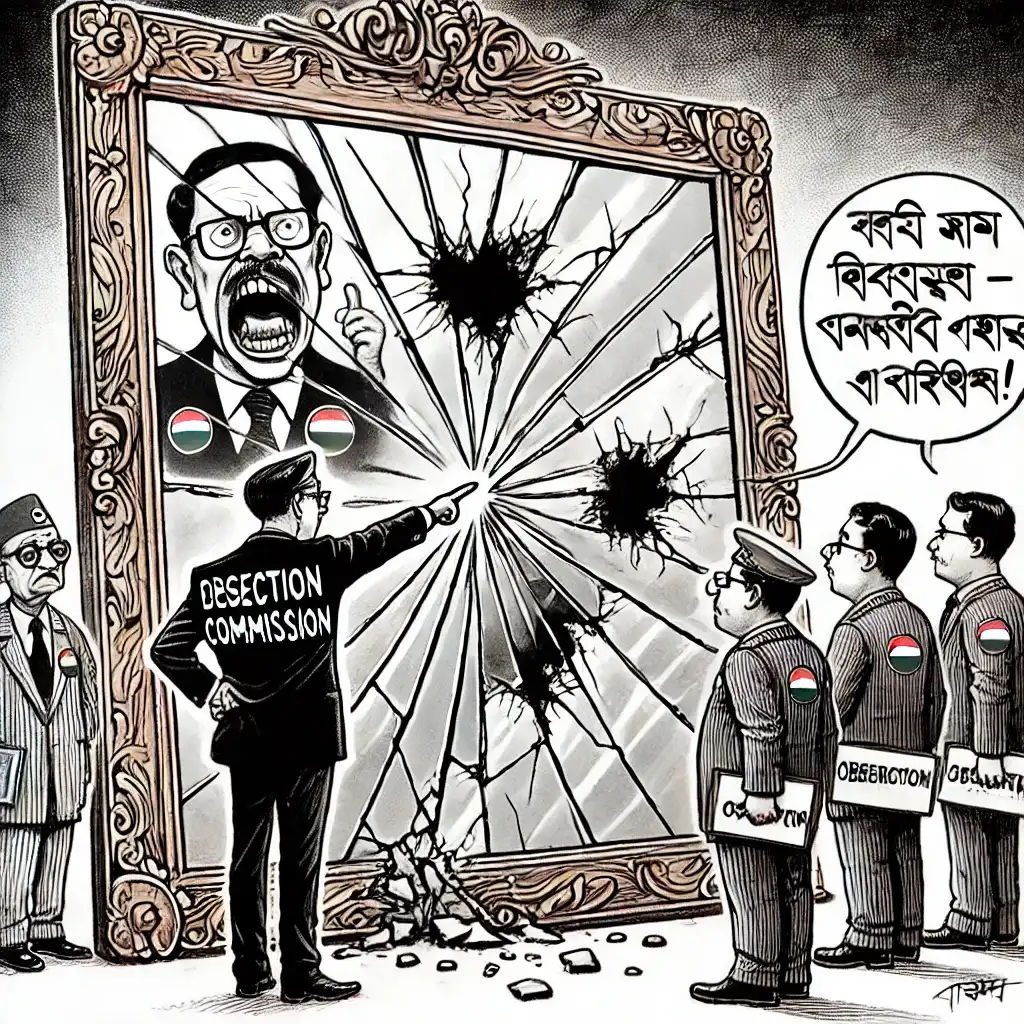 The remark came on November 25, during a meeting at the Election Commission’s headquarters with domestic observation groups. The CEC urged them to “move forward” rather than revisit past failures and advised them to stay away from politics. But these words fail to acknowledge an essential truth: observers do not create problems— they report them.
When a mirror reflects an uncomfortable image, blaming the mirror is a distraction, not a solution.
In every functioning democracy, the responsibility for ensuring a credible election lies with one institution above all others: the Election Commission. Its neutrality, competence, and willingness to enforce the rules form the backbone of public trust. If the Commission falters, no amount of observer restraint—or silence—can restore legitimacy.
Instead of hinting that “incorrect reporting” might jeopardize future accreditation, the Commission should be guaranteeing the independence, safety, and freedom of observers. Pressuring them, even indirectly, undermines transparency at precisely the moment when the nation needs it most.
A free and fair election cannot be manufactured through rhetoric. It must be demonstrated through action: equal enforcement of rules, accountability for abuses, and an unwavering commitment to openness. The public will believe in the election only if the Commission makes itself worthy of that belief.
Before questioning the eyes that watch, the Commission must first examine the reflection staring back at it.

- admin1@gmail.comhttps://thebusinessin.com/author/admin1gmail-com/

- admin1@gmail.comhttps://thebusinessin.com/author/admin1gmail-com/

- admin1@gmail.comhttps://thebusinessin.com/author/admin1gmail-com/

- admin1@gmail.comhttps://thebusinessin.com/author/admin1gmail-com/